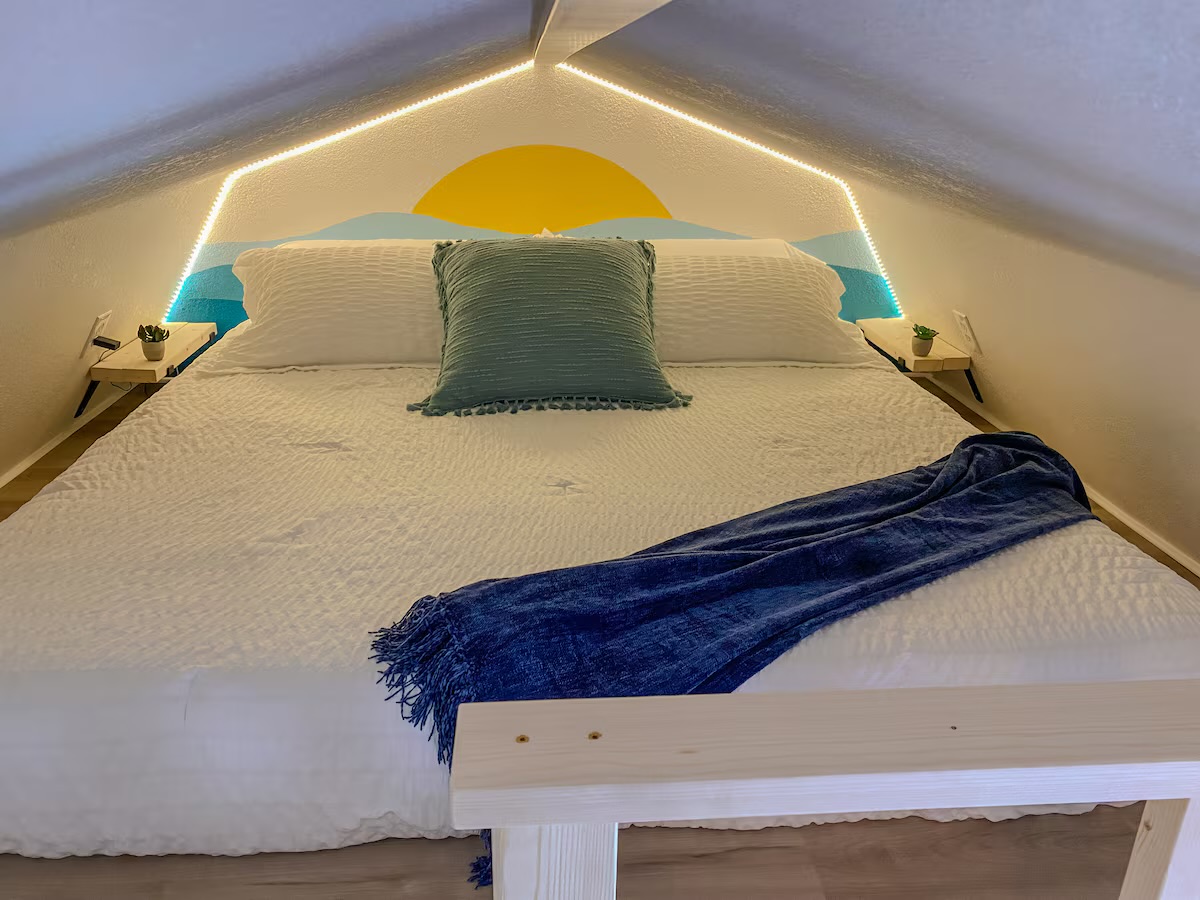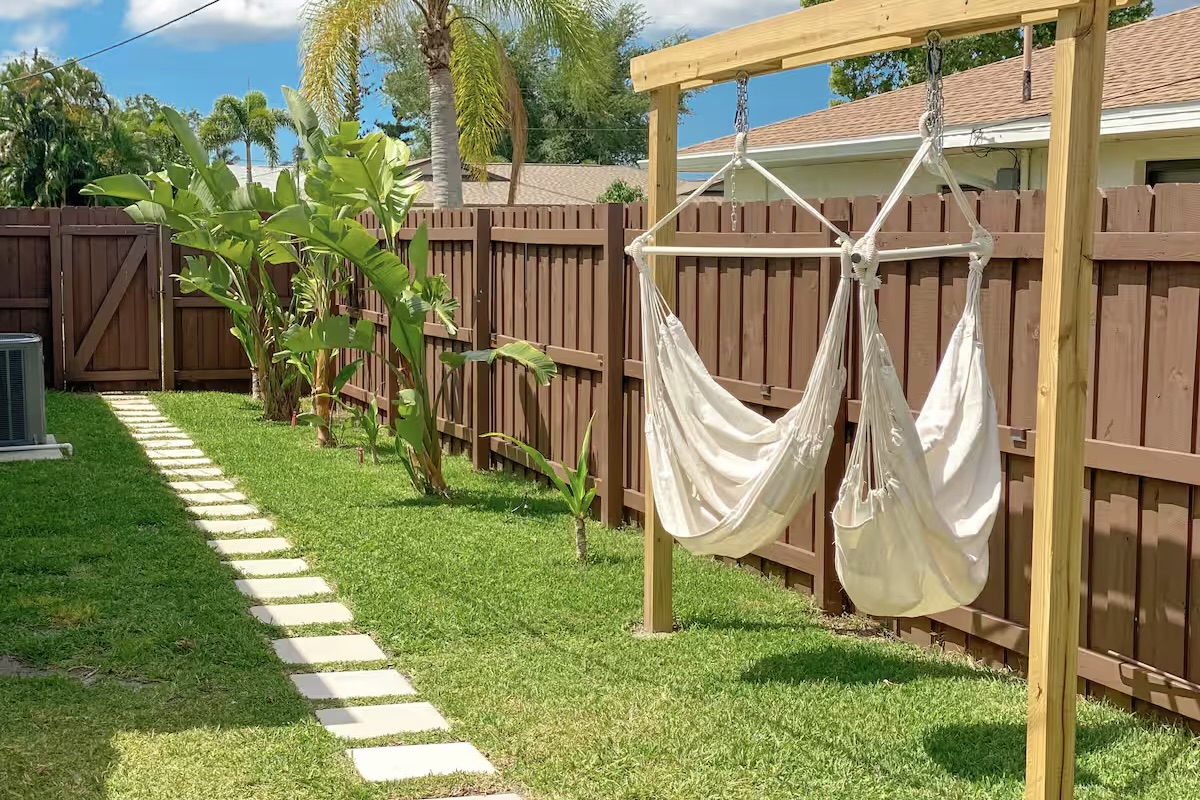
When you host a guest house on your own property, separation does not happen by default. Even if the structure is detached, guests can still feel like they are stepping into your personal space if the layout is not intentional.
For me, the goal was simple. I wanted guests to feel like they were arriving somewhere defined and self contained, not walking through my backyard trying to figure out where they belonged.
That required deliberate design choices, starting with parking.
Parking Placement Matters More Than You Think
The experience begins the moment guests pull into the driveway.
If they park far from the entry point or near your personal front door, it immediately blurs the boundary between your home and the rental. Guests hesitate. They look around. They second guess where to go.
In my case, the guest house sits toward the left side of the property, so I have guests park on the left side of the driveway. That small alignment makes the next step obvious. They exit their car and move directly toward the side gate on the left side of the home.
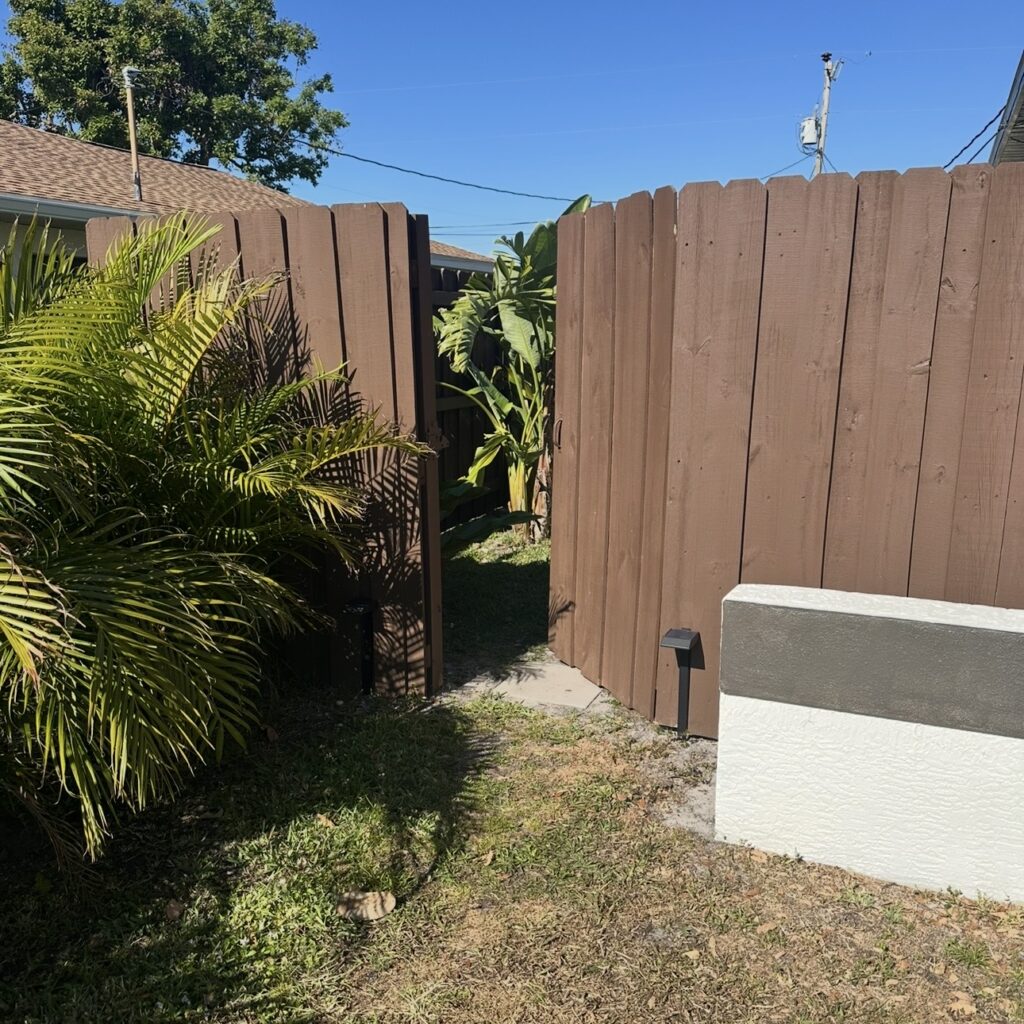
There is no crossing in front of my main entrance. There is no wandering through shared areas. The direction feels natural because the parking position matches the entry point.
Providing parking as close as possible to where guests will enter reinforces separation before they even reach the gate.
A Defined Entry Route Removes Uncertainty
After parking, guests pass through a wooden gate on the left side of the property and follow a clear path that leads toward the back where the guest house is located.
Once they step through that gate, they are inside a fully enclosed area that runs all the way to the guest house and wraps around it. That physical transition changes the dynamic. They are no longer near my home. They are moving within their own designated space.
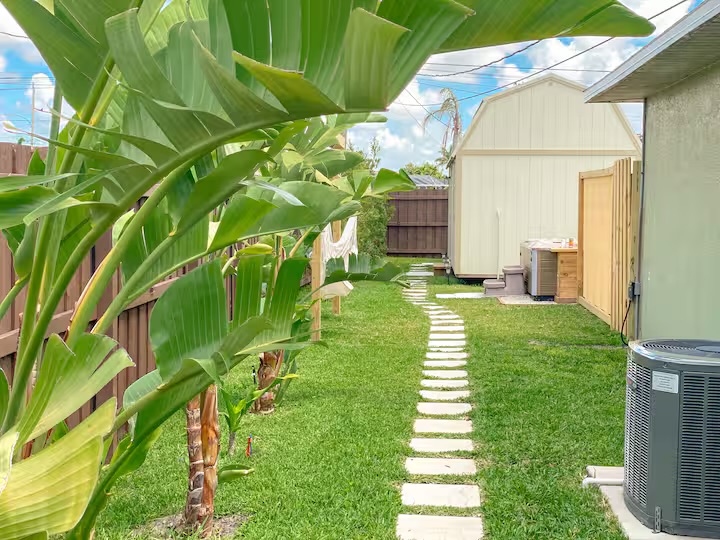
Clear direction prevents hesitation. Guests should not have to text for clarification or scan the property for clues. When the layout answers their questions automatically, arrival feels smooth and intentional.
Visual Barriers Create Psychological Comfort
Physical separation is not only about distance. It is about visibility.
I divided the backyard so the guest house area is fully screened off from the rest of my yard. Instead of relying on verbal explanations about shared space, the structure itself defines it.
When guests sit outside, use the hot tub, or relax in the hammock chairs, they are doing so within a space that feels contained. They are not looking into my private yard, and I am not looking into theirs.
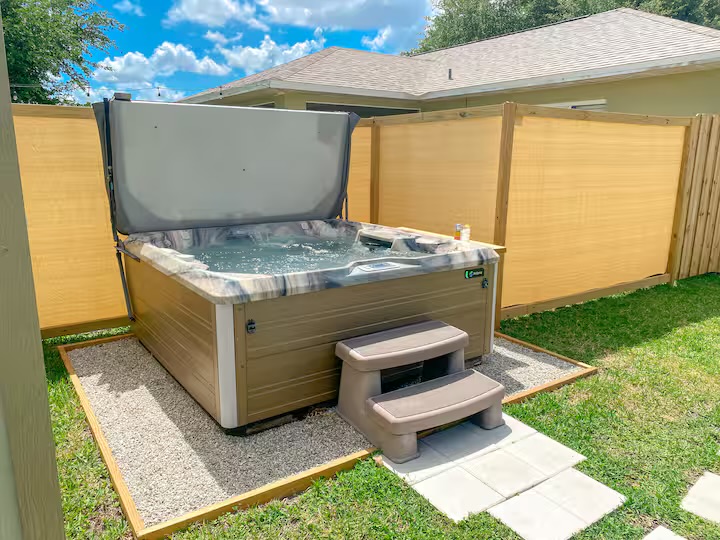
That clarity reduces tension on both sides. Privacy should not depend on behavior alone. It should be built into the layout.
Hosting at Home Requires Awareness, Not Silence
Because the guest house sits on my property, daily life continues. I use my backyard and move around normally.
The difference is consideration. I approach it the same way I approach living next to neighbors. I am mindful of noise, especially at night, and I communicate simple quiet expectations. During the day, regular activity is not treated as a problem.
The goal is balance. Hosting on your property should not require you to retreat from your own space, but it does require awareness.
Clear Boundaries Prevent Awkward Interactions
Ambiguity is what creates discomfort in shared property hosting.
The fenced guest house area functions as its own zone. Everything inside that enclosure belongs to the guest stay. Everything outside of it belongs to my home.
Because the boundary is visible and physical, it rarely needs explanation. Guests naturally remain within their area, and I remain within mine. That structure prevents small misunderstandings from becoming awkward moments.
Effortless Check In Strengthens Separation
Interaction can either reinforce separation or blur it.
All check in instructions are sent automatically before arrival and written clearly enough that guests can access the space without contacting me. Directions are specific. Park on the left side of the driveway. Walk through the wooden gate on the left side of the property. Follow the path to the back. Enter the code and press enter.
When check in is simple and independent, guests feel confident. They do not feel like they are intruding on someone’s home. The process feels self contained, which reinforces the physical separation built into the property.
What This Taught Me
A detached structure alone does not create separation. Design does.
Parking alignment, defined pathways, visual barriers, and clear boundaries all work together to remove uncertainty. Once uncertainty is gone, comfort increases for both host and guest.
Hosting a guest house on your own property becomes sustainable when the space feels intentional rather than improvised. That intentional design starts with something as simple as where the car is parked.