At home, I enjoy making a good cup of coffee. I use an espresso machine with a built-in grinder, and it wasn’t something I mastered overnight. It took some trial and error to figure out the right grind and timing. Even getting a consistent shot at the beginning required a bit of patience.
When I started setting up the coffee station in my guest house, I almost went in that same direction. I liked the idea of installing a nicer machine that felt elevated. It seemed like an easy way to upgrade the space.
Then I stepped back and thought about the guest experience instead of my own preferences.
If it took me time to feel comfortable using my espresso machine in my own kitchen, what would it feel like for a guest trying to make a quick cup of coffee in a place they just checked into?
That’s when the decision became simple.
Guests Are Already Adjusting to a New Space
When someone checks into a guest house, the first few minutes shape how they feel about the stay. Many have just come from a flight, a long drive, or a full day of travel. They may be carrying luggage, coordinating plans, or simply feeling tired. Their energy is already lower than usual.
On top of that, they are figuring out where things are, how the shower works, where the extra towels are stored, and how the lighting is set up. There is always a short adjustment period in any unfamiliar space.
Every added layer of complexity increases mental load. When guests are tired, even small friction feels bigger than it should.
A complicated coffee machine may look impressive on a counter, but it requires attention. Multiple buttons, strength settings, cup size options, grinding steps, or specialty pods all demand small decisions. Early in the morning, those small decisions feel heavier than they need to.
Most guests just want coffee without effort.
I chose a basic $25 drip coffee maker with a single button. Add water. Add ground coffee. Press start. That’s it.
It removes friction instead of adding it.
Familiar Feels Comfortable
A standard drip coffee machine is something most people have seen or used before. Even if they have not used that exact model, the design is intuitive. It does not require explanation.
Familiarity matters in a new environment. When guests wake up in an unfamiliar space, small tasks should feel obvious. They should not need to stop and figure things out.
A simple coffee maker helps with that. Guests can walk into the kitchenette, add water, add coffee, press a single button, and have a cup brewing within seconds. There are no instructions to read and no settings to interpret.
Those small moments shape how comfortable the space feels.
Good guest house design follows the same principle. The space should feel separate from the main home rather than like an extension of it, so guests can move through it naturally without wondering how things work or whether they are using the space correctly.
A simple coffee setup supports that feeling. Guests can wake up, brew a cup, and start their morning without hesitation.
That smooth interaction matters more than having a premium machine.
Thoughtful Does Not Mean Complicated
Choosing a basic machine did not mean the coffee station had to feel plain.
I added quality mugs instead of mismatched cups. I used glass jars to hold the ground coffee and sugar so the counter would stay clean and organized. I placed a small artificial plant nearby and added a simple sign that says “sunshine and coffee.” Those small touches make the corner feel intentional and welcoming.
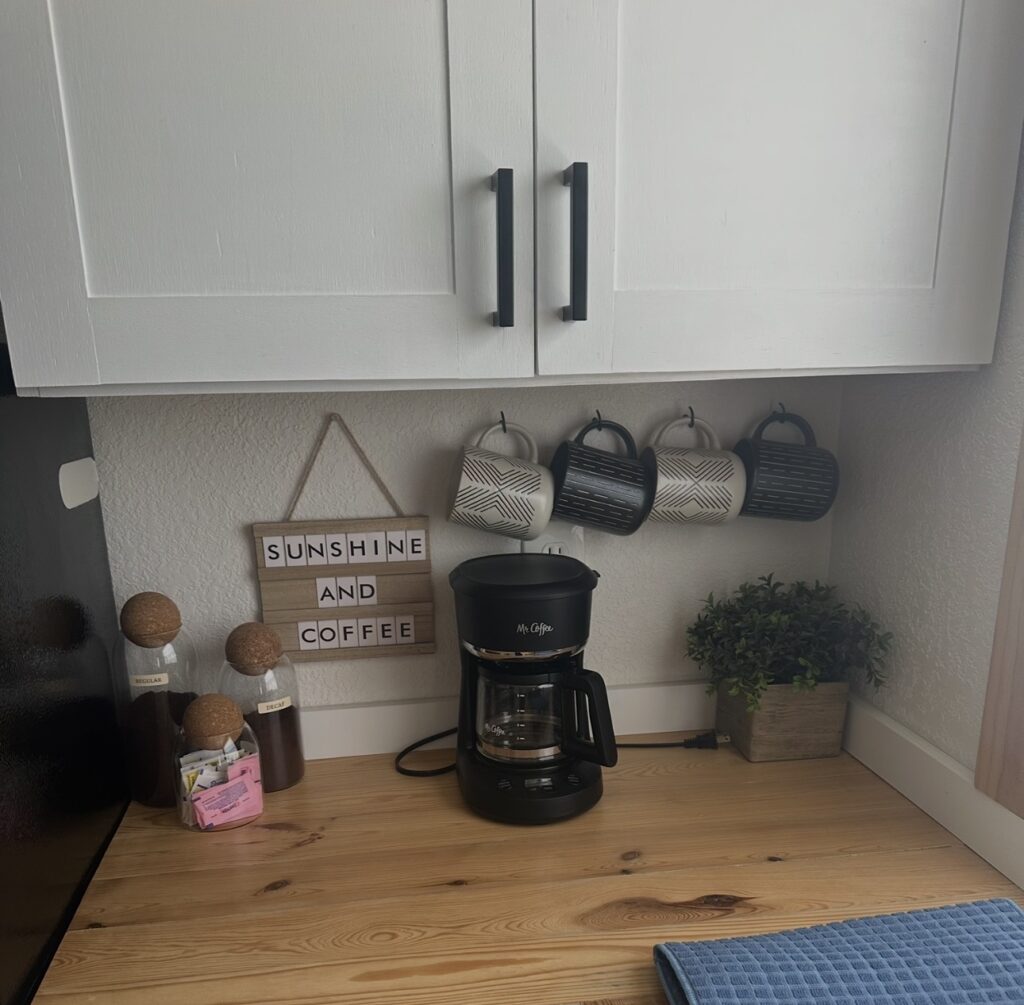
The machine itself is simple. The presentation around it makes the space feel cared for.
Guests respond to how a place feels, not how expensive the equipment is.
The System Is Easy to Maintain
The machine I chose includes a reusable filter, so I do not have to buy paper filters. After each stay, I rinse it out. It takes seconds.
I buy a large resealable can of ground coffee for about ten dollars, which keeps freshness better than bags and lasts a long time. I refill the glass jar when needed. I also offer decaf, though it is used less often and does not require frequent refilling.
There are no pods to track. No specialty supplies to reorder. No complicated cleaning routine.
Over two years, the same $25 machine has continued to work without issue. Guests use it every stay. No one has asked for something different. No one has mentioned it negatively in a review.
It quietly does its job.
Designing Features Without Adding Friction
In my guest house, I invest where it directly affects comfort and reviews. The king mattress in the loft completely changed how guests describe the space. Layout and privacy decisions improved the overall experience. Those were strategic upgrades because they clearly improved how the stay feels.
I do believe in adding meaningful features. Features matter. They shape perception and increase value. But a feature should make the stay better without making it harder.
The coffee maker needed to meet expectations and function smoothly. It did not need to become an experience of its own.
Hosting is not about avoiding features. It is about adding the right ones and removing unnecessary complications from them. Every detail should either improve comfort, increase clarity, or reduce mental load. If a feature adds steps, confusion, or friction without meaningful benefit, it works against the experience instead of enhancing it.
A well-designed guest house feels complete, not complicated.
In a small space especially, the best features are the ones guests can use effortlessly.